Commercial Energy Procurement: How to Avoid Overpaying in Today’s Market
A playbook from Stanwich Energy on how to get better energy pricing
.png/jcr:content/Energy%20Procurement%20cover%20(1920%20x%201080%20px).png)
If you purchase energy through supply contracts, you know that elevated energy prices are no longer a short-term phenomenon. In today’s volatile market, a strategic procurement approach is imperative to managing costs and avoiding overpayment.
Energy contracts aren’t our area of expertise, so we’ve turned to Bob Johnson of Stanwich Energy for some expert perspective on the biggest forces in the energy market and how to secure better prices to reduce financial risk and enter the right contract for your business.
What's Going On in Energy Procurement?
If commercial energy management feels more complicated than it used to, you’re not imagining it. In the past, many organizations could take a more passive approach to their supply contracts and still secure competitive pricing. That’s no longer the case.
What's changed? Quite a bit. Market volatility has increased, supply contracts have become more complex, and market conditions have shifted in a more bullish direction. Each of these factors has made energy pricing more difficult to manage.
Factors Pushing Up Energy Costs
- Heightened market volatility
- More options overall
- Supplier consolidation and operational issues
- Higher interest rates
- Rising labor, material, and infrastructure costs driving higher utility prices
- Rising LNG exports to the global market (see Stanwich’s post on this)
- Increased non-energy cost components
- Complex terms and conditions leading to added contractual risk
A Look at Market Prices
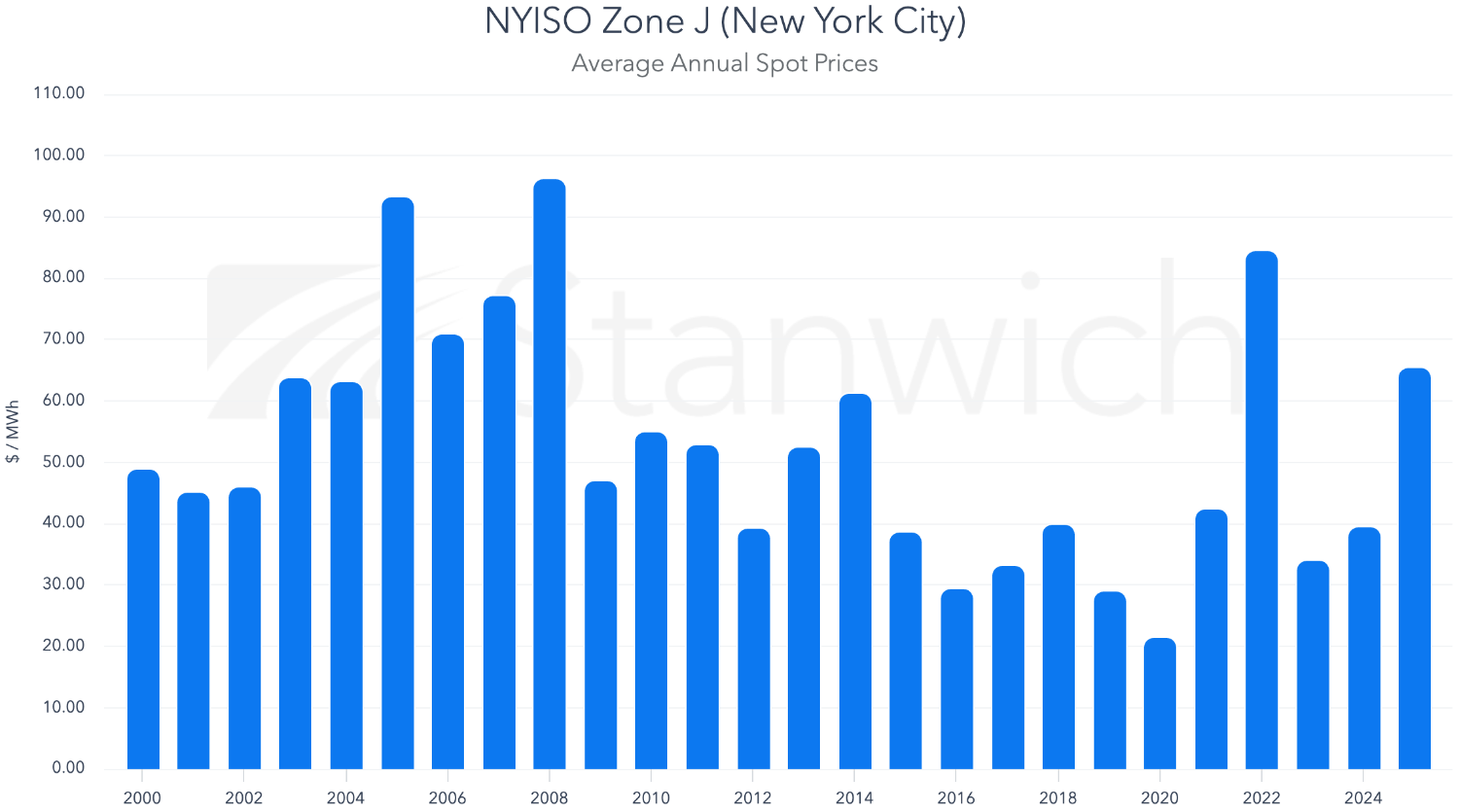
How do these factors show up in energy pricing? After a prolonged bear market, the market has turned more bullish, and that trend is unlikely to reverse over the next several years. The chart below lays out the market data for NYC specifically, but the trend holds in other locations around the United States.
Breaking Down the Shift to a Bull Market
When you look at the chart above, certain factors jump out over the last 15 years. Here's what we see:
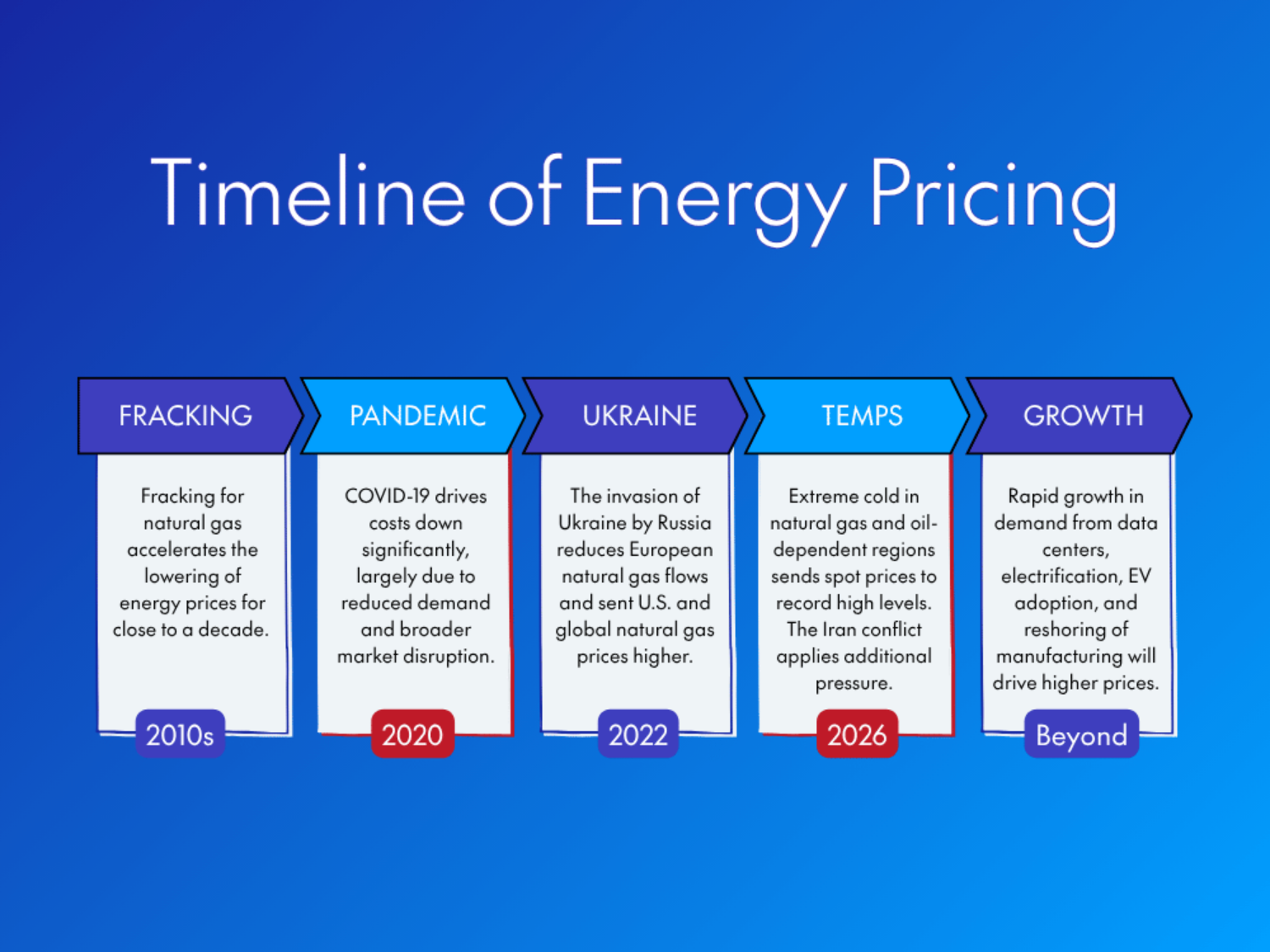
2010s: Fracking for natural gas accelerates the lowering of energy prices for close to a decade.
2020: The COVID-19 pandemic drove costs down significantly relative to the preceding two decades, largely due to reduced demand and broader market disruption.
2022: The invasion of Ukraine by Russia reduced European natural gas flows and sent U.S. and global natural gas prices higher.
2026: Extreme cold in natural gas and oil–dependent regions sent spot prices to record high levels. The Iran conflict applies pressure to winter pricing across those same regions.
Beyond: Rapid growth in demand from data centers, electrification, and EV adoption, all of which have already begun, will drive higher prices.
Misconceptions About Energy Procurement
What does this all mean for energy procurement, and how has the process changed? Here are some key takeaways:
- Energy procurement is no longer a simple, set-it-and-forget-it expense. In a market shaped by greater complexity and volatility, controlling costs requires a much more proactive approach.
- The supplier landscape is more concentrated than it once was, with fewer players and increased supplier risk.
- Contract timing has also become vital. In some cases, organizations need to be prepared to act within hours, not days, and any added flexibility often comes at a premium.
- Bill audits can still uncover errors, but they are unlikely to produce the kind of large savings some buyers expect.
- Contract terms and conditions, if not fully understood, can lead to significant contractual risk.
- Increased billing line items mean that a more in-depth understanding of how the grid is evolving is critical to comparing offered rates.
- Energy futures are volatile, and price levels should be evaluated against a company's risk profile rather than treated as purely unpredictable.
How Can Submetering Help With Energy Pricing?
Energy contract terms are shaped in part by how your organization consumes energy, so understanding your demand profile is important to secure favorable pricing. Submetering data provides a more detailed view of usage patterns, which can strengthen your position during contract negotiations. The same data can also improve consumption forecasts ahead of your next contract, which often run 12 to 24 months. In today’s market, stronger forecasting is an important part of procurement planning and can help you act more confidently when pricing is favorable.
Stanwich Energy's Recommendations
Achieving lower energy contract costs is still possible. As they say, Fortune favors the prepared. Here’s how to secure a better deal:
- Rising prices may not be avoidable in the current market, so planning for that reality is essential.
- To secure terms that fit your needs, you need a clear understanding of your risk tolerance. If you do not have that in-house, an experienced advisor can help.
- Preparation matters. The key contract terms you want should be defined in advance so you are ready to act when pricing moves into an attractive position. Market opportunities still arise, but they may not last long.
- Lower gas prices in one region do not necessarily translate to the rest of the country. Contract decisions should be based on the relevant market for each location.
Additional Recommendations From utiliVisor
- Don’t trust an electric supply advisor that offers another competing service, such as tenant billing, because they may not have your best interest in mind when presenting terms.
- Relatedly, don't hire your energy advisor to also serve as your submeterer or billing provider. If you do, that company will be collecting fees from both sides: the utility and you. In that arrangement, the advisor is unlikely to be motivated to ensure your property is operating as efficiently and cost-effectively as possible.
- As a side note about this conflict of interest, energy suppliers are often slow to deliver accurate bills, which can hurt cash flow and tenant relationships. A third-party billing service can provide accurate bills on time, helping you recover tenant utility costs faster.
- Make sure you and your energy advisor understand how tenant changes affect the building’s load profile so you can secure terms that reflect your actual circumstances.
You Might Like
Related articles from our blog:

About utiliVisor
Your tenant submetering and energy plant optimization services are an essential part of your operation. You deserve personalized energy insights from a team that knows buildings from the inside out, applies IoT technology and is energized by providing you with accurate data and energy optimization insights. When you need experience, expertise, and service, you need utiliVisor on your side, delivering consistent energy and cost-saving strategies to you. What more can our 45+ years of experience and historical data do for you? Call utiliVisor at 212-260-4800 or visit utilivisor.com