How to Be in Compliance and Win: Turning Building Mandates Into Revenue Opportunities
What if compliance mandates could help you be more profitable?
It’s easy to think of building projects as a straight line from A to B to C. But your wheezing cooling tower, your growing utility bills, and your compliance mandates aren’t separate projects – they’re all interlocking pieces of the same puzzle.
Take this common scenario in new construction. During the construction phase, the build team installs meters to check the submetering box for ASHRAE 90.1 compliance. Great. But when the building is handed over to operations, the property management team will need to recoup utility costs from the tenants in the building right away. The problem is that the submetering system wasn’t designed to capture the way utilities are used in the building – it wasn’t really “designed” at all. Suddenly it’s a scramble to retrofit a system that could have been keeping energy costs down during the build and ready to rock tenant billing on Day Two.
Instead, more money has to be spent, more complexity added, and an opportunity is missed to create a seamless system that can serve multiple purposes from the start.
How can these situations be avoided? We recently sat down with Colin Milner,* regional director and certified energy manager at Sustainable Investment Group (SIG), a company of TÜV SÜD, to get his perspective on regulations, building performance, and long-term, cost-effective asset enhancement.
Turning Compliance Into Competitive Advantage
Rather than viewing Local Law 97, ASHRAE standards, and other mandates as burdens, Milner frames them as opportunities. For example, both LL97 and ASHRAE 90.1 require submetering in large facilities (>25K sf), an added cost if you weren’t metering already. But submetering can also generate revenue and lower operating costs. In the end, Milner says, the result is a building that’s better able to compete. The smarter play, whenever possible, is to see how MEP infrastructure upgrades fit into the bigger picture and whether the money set aside for those projects is better used by putting it into other places, he said, particularly if you can leverage utility incentives to offset initial study costs as well as equipment upgrades.
A common motivator for optimization, Milner said, is deferred maintenance, such as a geriatric cooling tower. Addressing equipment on its last gasp is also the perfect time to look at your compliance requirements, your MEP equipment, and your incentive options with an eye toward alignment. How does the replacement of the cooling tower fit into your decarbonization goals and compliance requirements so that you’re not replacing it with a chiller or heat pump in five years?
If you thought there had to be a catch to that free incentive money, you’re (partially) right. To maximize those incentive opportunities, you need to understand what to measure and why. As Milner puts it, “If you’re just measuring total energy use and total carbon use, you’re going to spend a lot more money than you otherwise would. If you’re looking at total carbon across a building but not looking at who and where and why it’s being produced, you’re missing out.”
Whatever the cause, receipt of a large utility backbill can be very disruptive. Most businesses that regularly pay their utility bills on a monthly basis do not expect to receive massive backbills for electricity, water, or gas supposedly consumed months or years ago.
Utility backbilling is permissible in New York State but subject to very specific legal restrictions on timing and amount. The energy regulatory attorneys at Harris Beach Murtha have extensive experience with these legal restrictions and in successfully representing clients in utility backbilling disputes – and Harris Beach has saved its clients millions of dollars in reduced costs. If the operator of a multi-family building receives a backbill, they can review it and the surrounding factual circumstances to determine if it is subject to total or partial cancellation under the relevant regulations. In appropriate circumstances, flexible fee structures are available so that a client will not incur any legal costs unless the backbill is reduced or cancelled.
If you receive a utility backbill and have any questions, feel free to contact John T. McManus at 518.701.2734 and/or jmcmanus@harrisbeachmurtha.com. Harris Beach Murtha has offices throughout New York State, Connecticut, and Massachusetts.
The information in this article is not a substitute for advice of counsel on specific legal issues. Prior results do not guarantee a similar outcome.
The Special Challenges of Existing Buildings
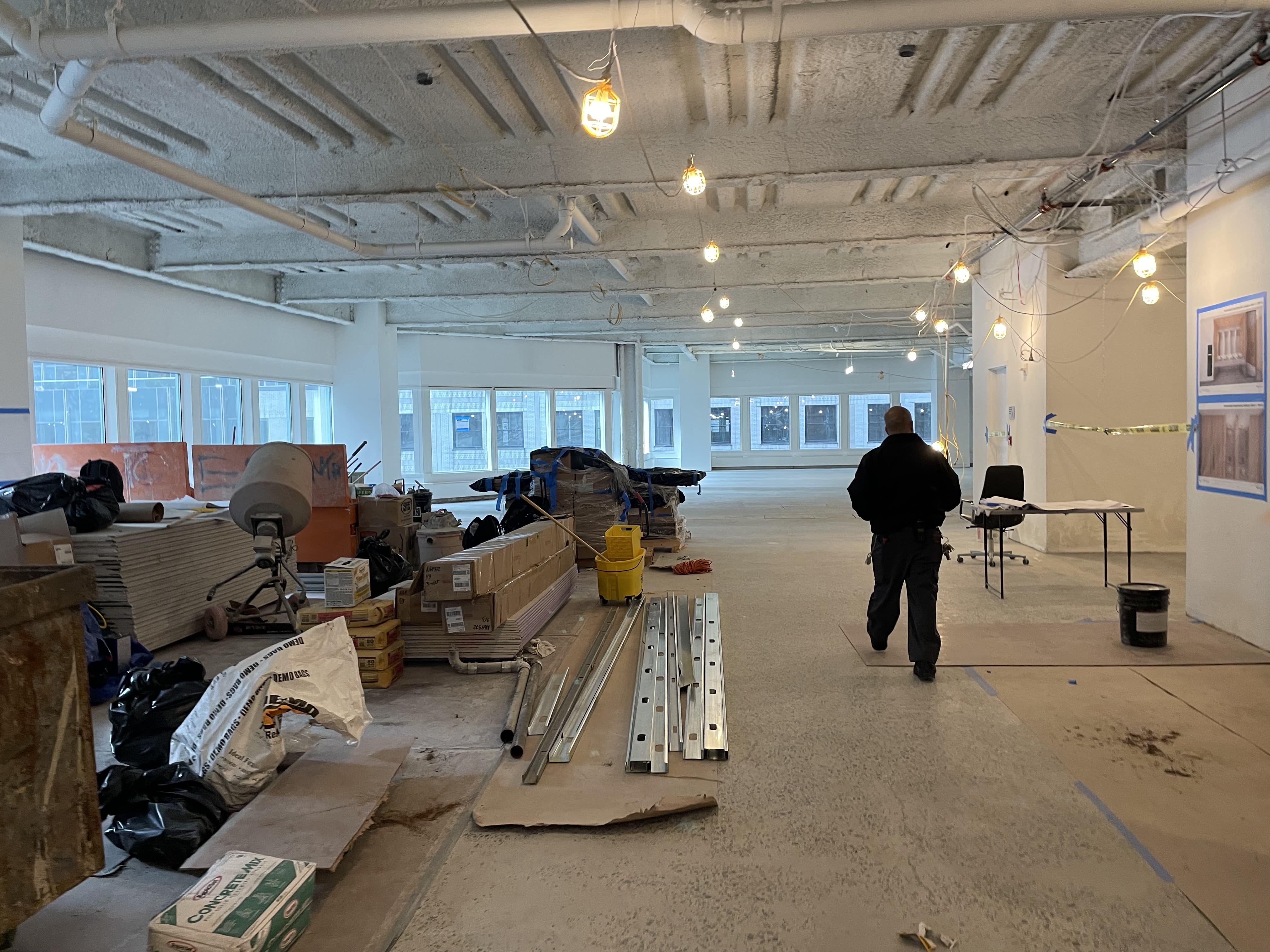
In comparison to older buildings, new buildings seem straightforward, Milner pointed out. “With new buildings, you do A, the result is B,” he said. “With older buildings,” Milner said, “you have to be more forensic to understand what’s going on in the building.
“So, if you have a certain amount of MEP equipment that was designed to meet a certain load, but now it's very different from an occupancy and energy use perspective. How you design your leasing, even how you design the building systems has changed. So, you need to go and align those. And metering helps you do that.
“Then there’s LEED reporting or anything else with requirements – metering is definitely a piece of that, too. So at the end of the day, you’re not only metering for revenue, you’re also doing it for LEED, for ASHRAE 90.1, for local laws, and operationally to identify efficiencies. For example, if you’re replacing the cooling system, how does that affect the heating system? Because if one system is fighting another, your carbon score or your energy consumption could go up, even if one system became more efficient – one could be fighting the other.” In other words, you won't know until you look at the whole picture, which is why a good submetering design is so essential from the get-go.
Key Takeaways
Whether you're managing commercial, healthcare, research, retail, or residential properties, Milner's advice boils down to this: don’t treat building improvements as isolated projects. That dying cooling tower? It's connected to your decarbonization plan. Need metering upgrades for LL88/LL97? They’re not just about local mandates; they also feed into LEED and incentive reporting, billing and cost recovery, and ongoing operational efficiency.
"Local laws, ASHRAE standards, or a mandate to electrify and meter your building—all of these really are just opportunities in the end," says Milner. "They’re opportunities to take what you're required to do and turn it into a positioning story of the asset and how you recover as much revenue from that asset as you can."
In other words, facility management is a lot like life: it looks a lot more linear than it is. Instead, the best management strategy is to capture accurate data and then integrate that history with tomorrow’s requirements and goals. That way, you’re designing in solutions that make your life easier, not harder.
*About Colin Milner
Colin Milner, Regional Director – East Coast, CEM, CBCP, MFBA, has more than 20 years of experience in building design, operations, and construction with a focus on sustainability. He specializes in regulatory compliance, ESG, sustainable building practices, project financing, and complex mechanical and electrical systems. Passionate about sustainability, Colin guides clients through training, outreach, and the implementation of cost-effective strategies. He also supports sustainable development planning and helps organizations track and reduce waste, water, energy, carbon, and greenhouse gas impacts.
You Might Like

About utiliVisor
Your tenant submetering and energy plant optimization services are an essential part of your operation. You deserve personalized energy insights from a team that knows buildings from the inside out, applies IoT technology and is energized by providing you with accurate data and energy optimization insights. When you need experience, expertise, and service, you need utiliVisor on your side, delivering consistent energy and cost-saving strategies to you. What more can our 45+ years of experience and historical data do for you? Call utiliVisor at 212-260-4800 or visit utilivisor.com