Why Tenants Are Charged for VRF Even When Their Unit Is Off
VRF charges are more complicated than for other heating & cooling systems. We wrote out explanations you can share with your tenants.
VRF isn't like other heating and cooling systems, which inevitably leads to tenant questions, particularly:
- How is my usage calculated?
- Why are my usage and charges so high?*
- Why am I being charged when I didn’t use the HVAC this month?
Here are some answers to help tenants understand where their charges come from.
*Note that rates are not included in this discussion because they vary by lease.
How VRF Systems Are Different
The first thing to know about VRF systems is that electricity for VRF is its own line item, distinct from lights and plug loads, because it's a complex and fully separate system.
Unlike simple lights and plugs, a VRF system has many kinds of components, including shared rooftop condensers, indoor units in each apartment (whether wall‑mounted, cassette, or ducted), and connecting refrigerant piping.
A tenant's VRF charge is based on how much heating or cooling their indoor units draw from the overall VRF system. Each indoor unit uses refrigerant and fan power, and sensors track the run time and refrigerant flow for each one. One tenant may only have two indoor units, and another may have four, and each unit may have different settings that modulate how much the unit demands. This data is tracked in the VRF system and then converted into total usage (kWh) per tenant for billing.
However, the interior units are not the only element of the bill. Everyone on a particular condenser (aka the outdoor unit) also has monthly charges for the shared components (the refrigerant and the condenser). See the last section, Why Do I Have a Charge If My System Was Off? for more info on these charges.
Factors That Affect the Size of Your Bill
Several factors have the potential to increase your charges compared to other tenants in the building:
- Your temperature setting: Setting each unit's thermostat to a higher temp in winter or a lower temp in summer increases the amount of electricity you’re consuming to achieve that temperature. Relatedly, the system must constantly adjust its output due to external temperature changes (i.e., whatever the weather is doing). So the larger the difference between the outside temp and your thermostat setting, the more often the system has to work to meet demand, which takes more energy. A more moderate setting (78°F in summer, 68°F in winter) is easier for the system to hit and maintain, which reduces your charges compared to having more extreme settings.
- Frequency of use: Running the system for longer, even on a low setting, can result in higher consumption compared with spaces where the HVAC is used less frequently. Spaces that sit empty regularly (e.g., daytime, overnight, or on weekends) benefit from scheduled temperature controls that match occupancy.
- Amount of sunlight: If your space receives more direct sunlight, it might require more cooling than your neighbors. Similarly, if it receives less sunlight, it might require more heat.
Why Do I Have a Charge If My System Was Off?
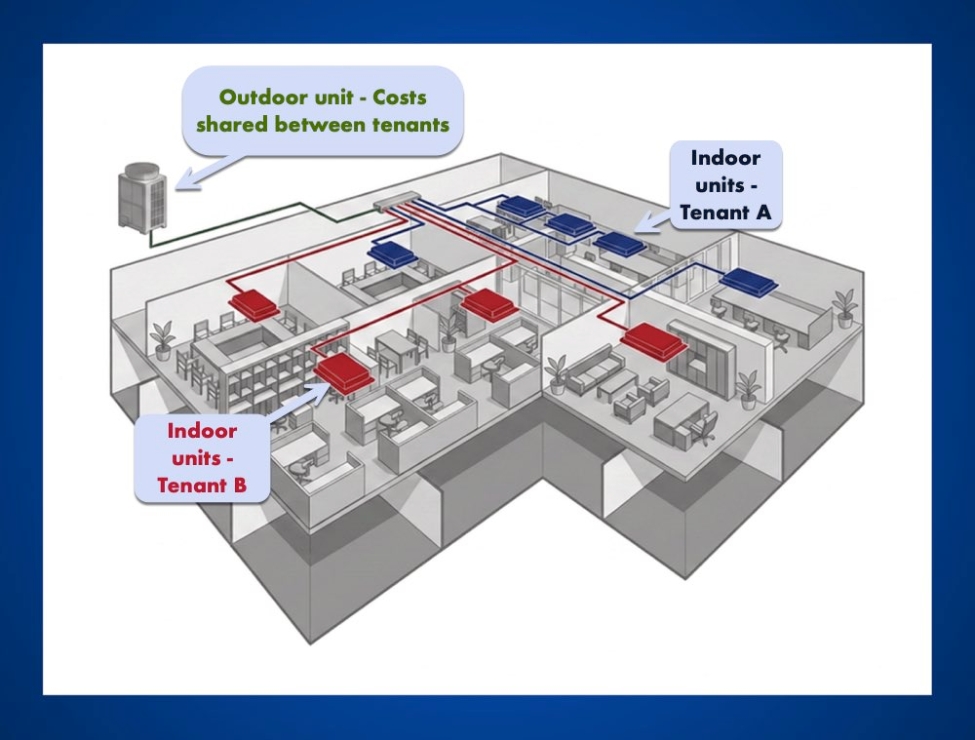
The rooftop condenser unit (aka outdoor heat pump) that heats or cools the refrigerant sent to your indoor units is shared by other tenants (see diagram). Therefore, even if your indoor unit is off, the outdoor unit continues to draw electricity because it has to be prepared to serve any demand at any time. Therefore, each tenant always has some electrical usage to pay as their fair share of maintaining the "engine” of the system.
You Might Like
Related articles from our blog:

About utiliVisor
Your tenant submetering and energy plant optimization services are an essential part of your operation. You deserve personalized energy insights from a team that knows buildings from the inside out, applies IoT technology and is energized by providing you with accurate data and energy optimization insights. When you need experience, expertise, and service, you need utiliVisor on your side, delivering consistent energy and cost-saving strategies to you. What more can our 45+ years of experience and historical data do for you? Call utiliVisor at 212-260-4800 or visit utilivisor.com